1. Broiler manure
The starting point is not an abstract biomass feedstock. It is a real farm by-product containing organic matter, nitrogen, phosphorus, potassium and bedding material.
RESNI helps rural businesses explain complex environmental technology in a way that is scientifically credible, commercially practical and understandable to planners, consultees and local decision makers.
Following a recent planning success for a poultry litter pyrolysis proposal, this page explains how RESNI can support similar projects by developing the environmental narrative, evidence base and technical justification needed to move from concept to consent.
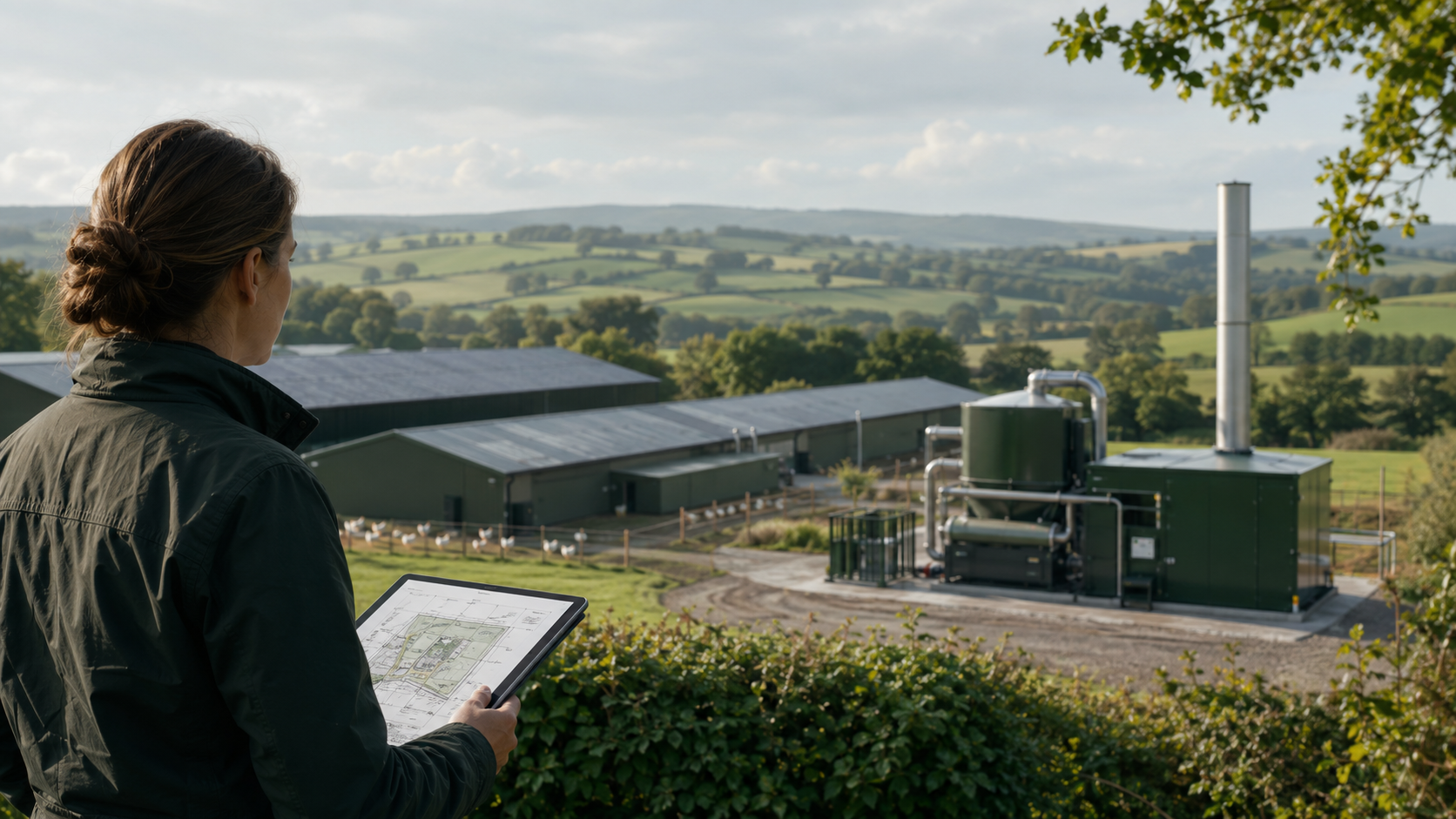
Pyrolysis is often unfamiliar to planners and local communities. A successful planning narrative therefore needs to explain the process in simple terms, define the feedstock, describe the outputs and show why the proposal is relevant to the farm rather than being treated as an unrelated industrial activity.
For poultry enterprises, the core argument is straightforward: broiler litter is already produced on the holding. Pyrolysis can convert that material into biochar while recovering useful heat and power. The output is a more stable, concentrated and manageable product that can be analysed, planned into nutrient management and used beneficially on land.
This visual can sit near the top of the webpage to help visitors understand the basic proposition within seconds.
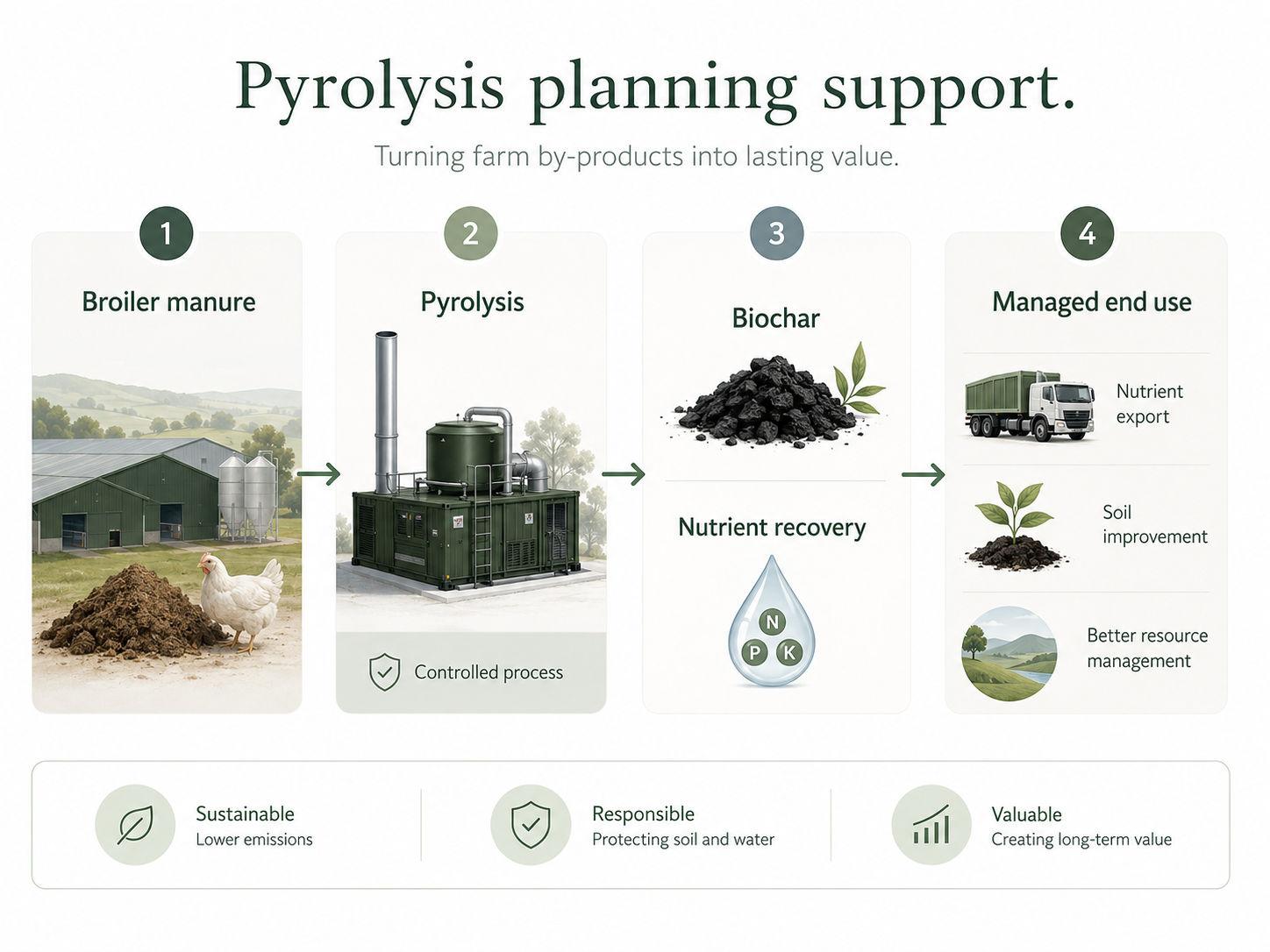
The starting point is not an abstract biomass feedstock. It is a real farm by-product containing organic matter, nitrogen, phosphorus, potassium and bedding material.
Under oxygen-limited heating, the material is converted into biochar, gases and heat. The planning narrative should explain the process clearly without over-claiming.
The resulting biochar should be described as a tested, managed material used according to soil need, crop requirement and nutrient planning principles.
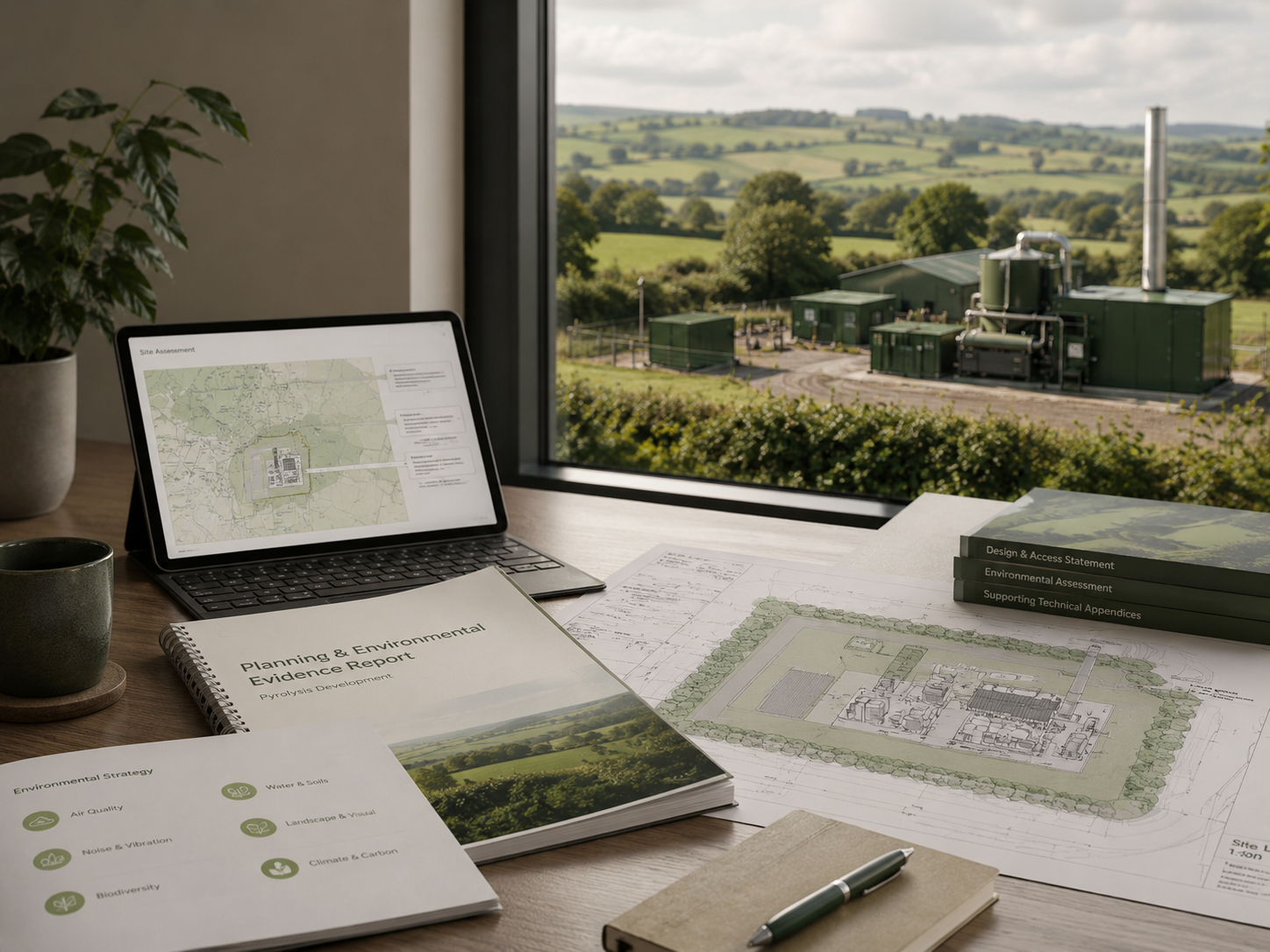
For the Corfton Farm case, the technical note explained the proposed use of broiler litter pyrolysis, the production of biochar, the link to renewable heat and power, and the agricultural and environmental benefits of land-applying a managed biochar product.
Where possible, the report should quantify scale. For example, the technical evidence estimated that 600 tonnes of fresh broiler litter per year could produce approximately 130–155 tonnes of biochar, depending on operating temperature. An indicative annual output of around 140 tonnes was assessed as being capable of application across approximately 140 hectares at 1 t/ha or 70 hectares at 2 t/ha, subject to soil testing, crop requirement and nutrient management planning.
Broiler litter biochar is generally richer in inorganic nutrients than wood-derived biochar. This makes it particularly relevant where the planning issue is manure management, phosphorus recovery and beneficial agricultural use.
Direct spreading can be valuable where crops need nutrients, but raw organic materials can also create environmental risk if handled poorly. Pyrolysis offers a more controlled route by producing a dry, hygienic and more manageable product.
A strong report does not simply claim that biochar is beneficial. It explains feedstock, process, output, land use, environmental controls and agronomic limits in a way that decision makers can follow.
“The planning case is strongest when pyrolysis is presented as part of a circular farm system: poultry litter is generated on site, converted under controlled conditions, and returned to productive use as a measurable biochar product.”
RESNI can help prepare the written technical narrative, evidence base and supporting visuals needed to explain farm-scale pyrolysis, biochar production, nutrient recovery and environmental benefit to planning authorities and consultees.