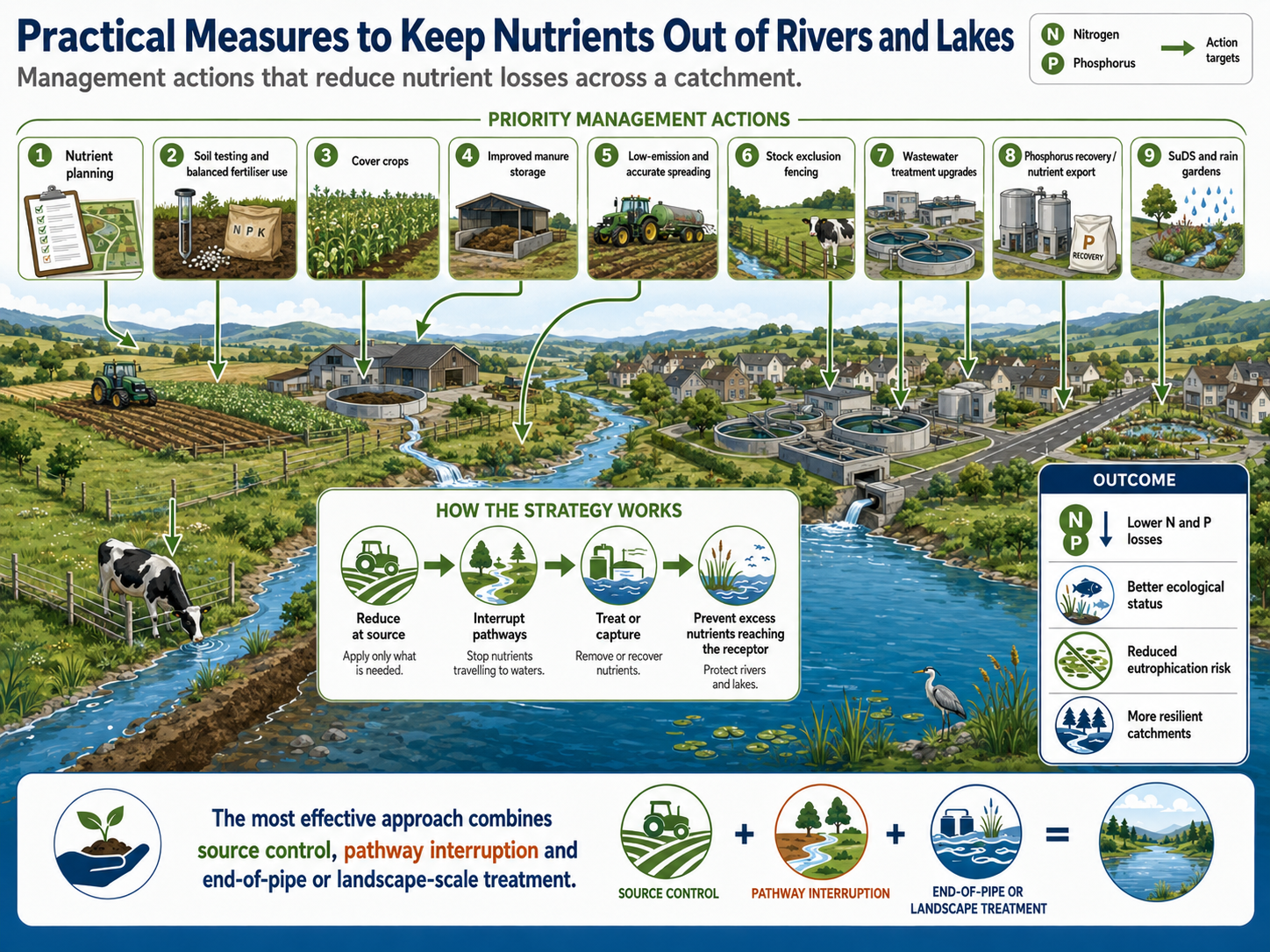
The story begins with nutrients moving through the landscape
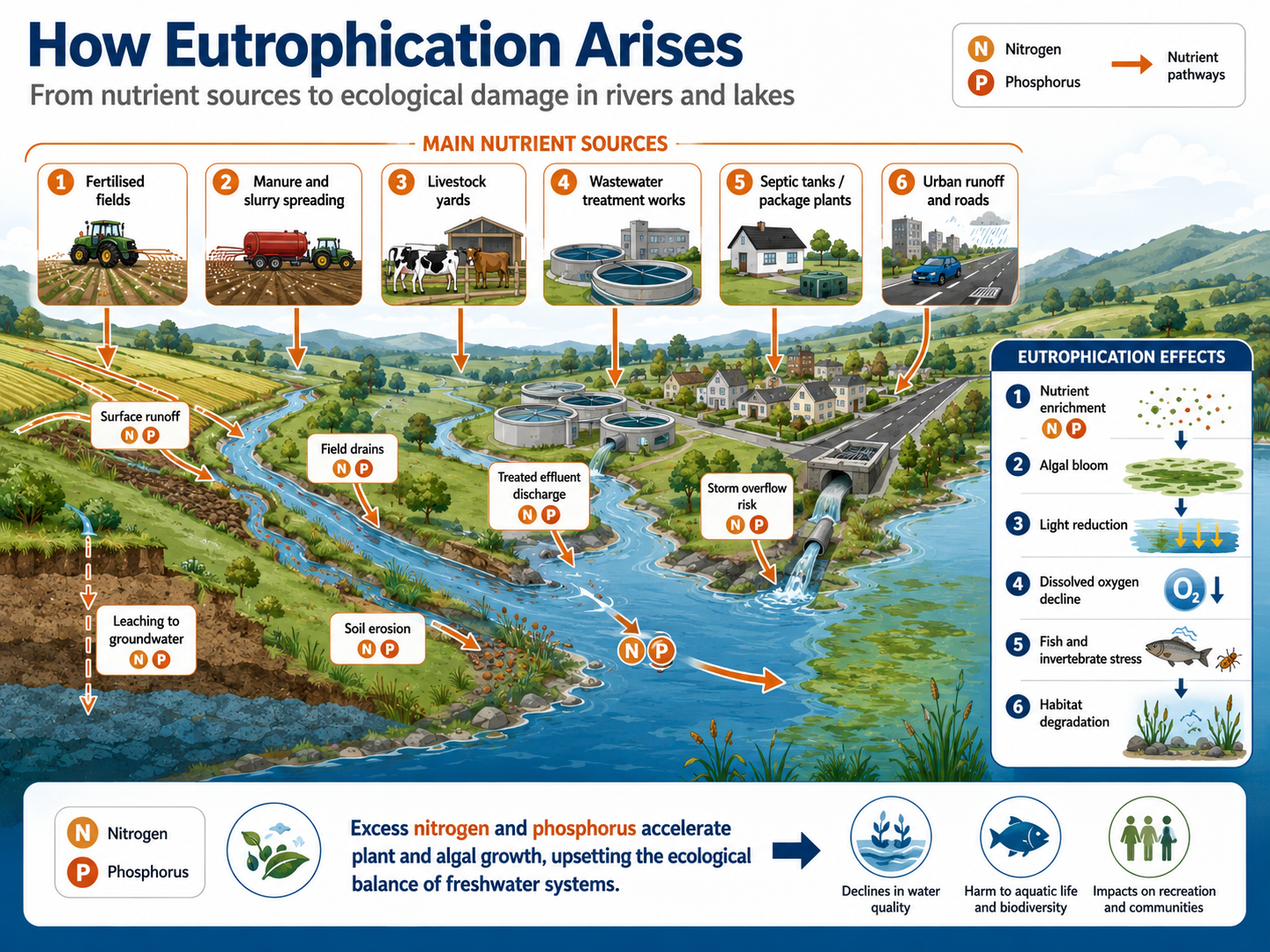
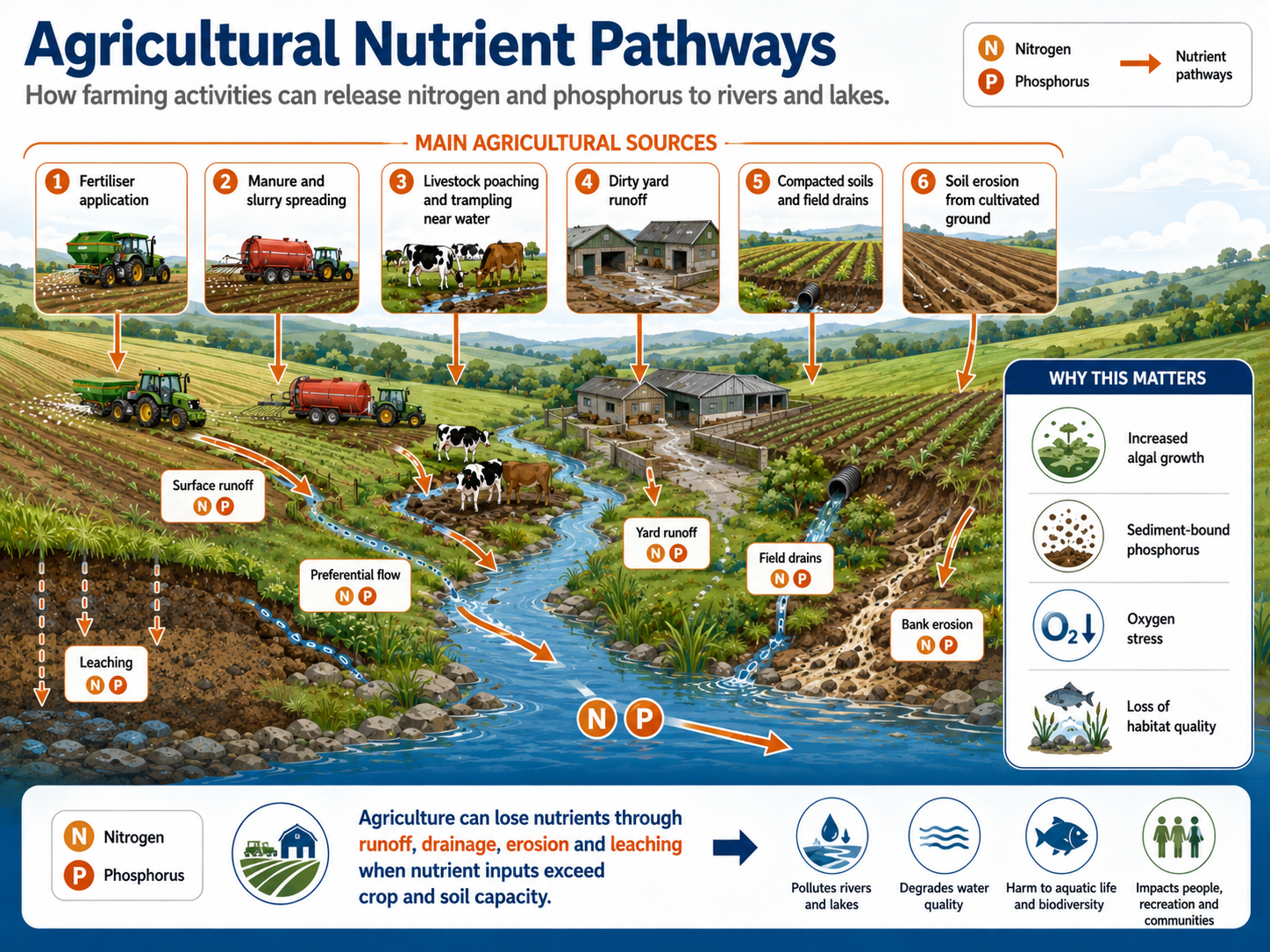
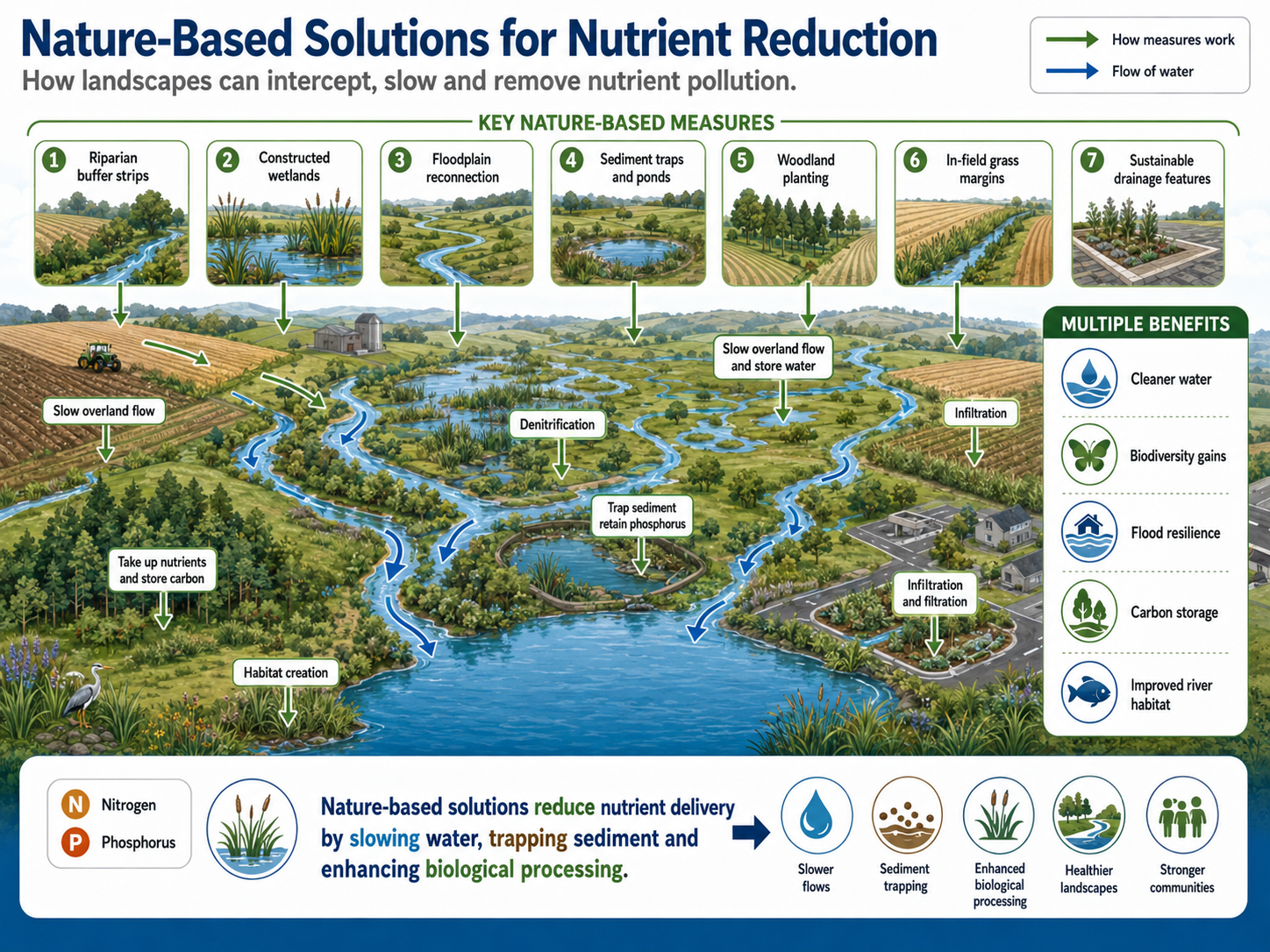
Nitrogen and phosphorus are essential plant nutrients. In the right place and at the right rate, they support crop growth and healthy ecosystems. Problems arise when more nutrients are applied, produced or discharged than the catchment can retain, use or safely process.
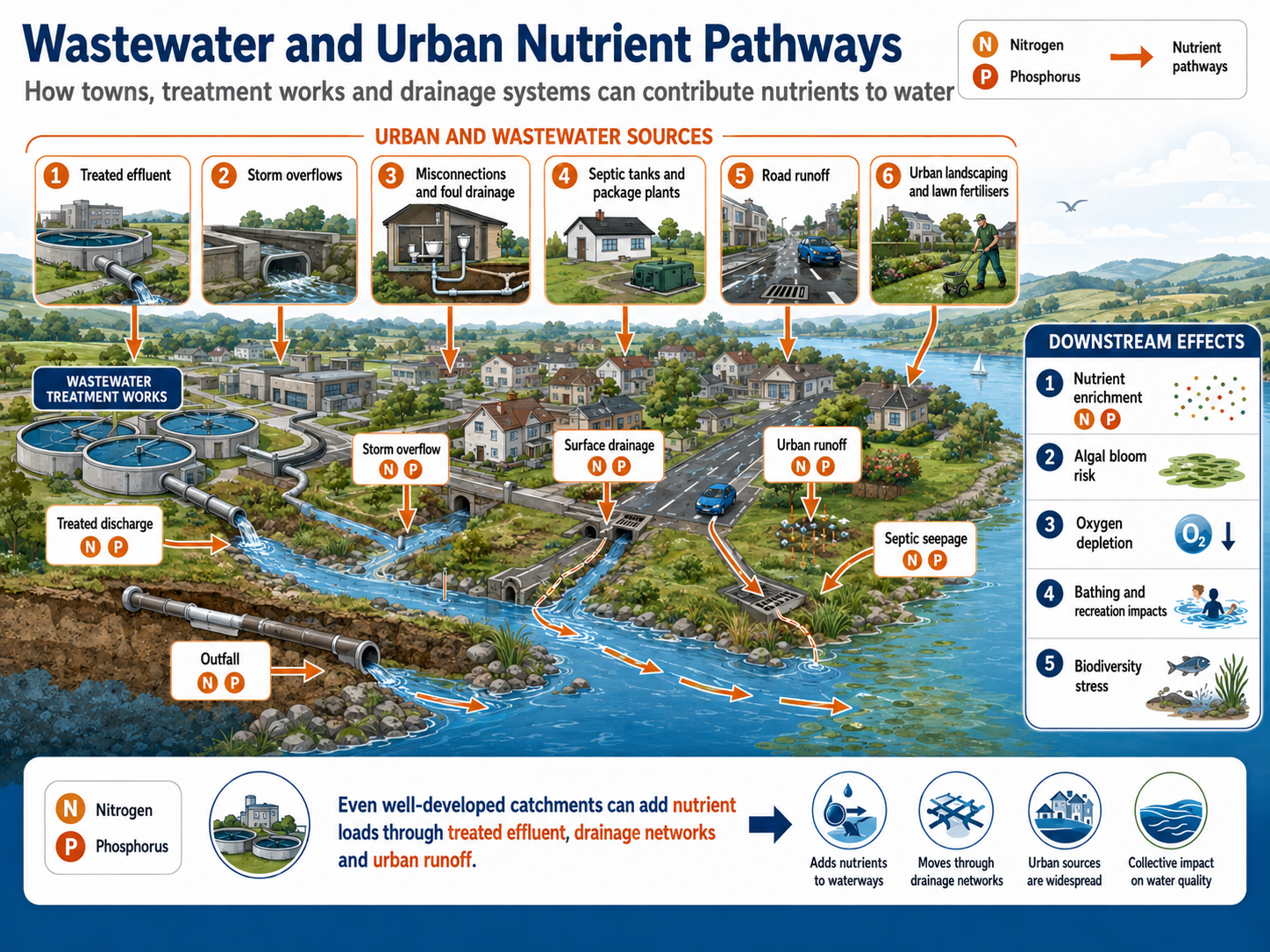
Once mobilised, nutrients can travel through surface runoff, field drains, groundwater, wastewater discharges, road drainage and eroding soils. These pathways often converge in the same receptor: a river, lake, wetland or estuary.
Understanding eutrophication therefore requires more than measuring water quality at a single point. It requires a catchment view of the sources, the routes by which nutrients move, and the receiving habitat that is affected by the cumulative load.
What is eutrophication?
Eutrophication is the ecological response to elevated nutrient enrichment. It can encourage excessive algal and plant growth. When this material dies and decomposes, oxygen can be depleted, reducing habitat quality for fish, invertebrates and aquatic plants.
In sensitive catchments, nutrient management is not only a water chemistry issue. It is also a habitat, biodiversity, planning and land-management issue.