Wood Biochar
Often valued for structural stability, carbon content and broad soil-conditioning applications, typically with lower nutrient value than manure-derived chars.
A practical guide to the applications, types and strategic value of biochar within farming, land management and wider environmental performance.
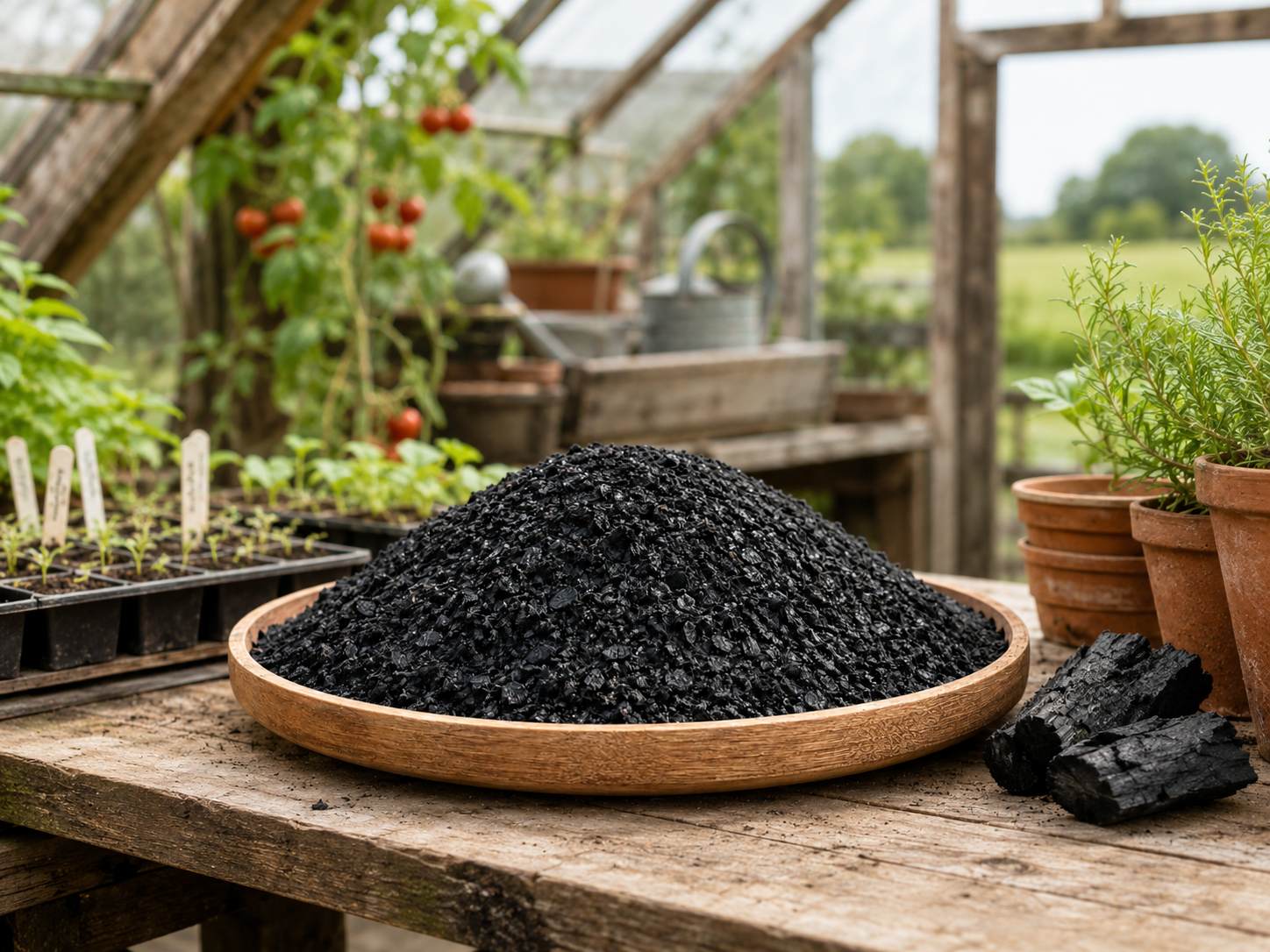
Broiler litter biochar shown as a practical, value-added material for modern agricultural systems.
Biochar is not a single universal product. Its value depends on feedstock, process temperature, ash content, mineral profile and the purpose for which it is applied. RESNI focuses on the applications and types of biochar that matter most in agricultural systems.
This includes nutrient management, residue valorisation, carbon return to land, environmental uses and the special relevance of broiler litter biochar where manure, nutrients and compliance pressures need to be managed more strategically.

Biochar is best understood in relation to the system it serves — soil, nutrients, residues, water, carbon and the commercial realities of agriculture.
Often valued for structural stability, carbon content and broad soil-conditioning applications, typically with lower nutrient value than manure-derived chars.
Particularly relevant for nutrient recovery, manure management and agricultural systems under pressure from nutrient loading and environmental regulation.
Produced from straw, husks or other plant-derived residues where arable systems seek better residue valorisation and carbon return.
Combined with minerals, composts or other materials where a more tailored performance is required for nutrient or environmental applications.
Better soil condition, pH balance, nutrient retention and soil function where matched appropriately to land type and agronomic need.
A more controlled route for storing, redistributing and applying nutrients than untreated organic residues alone.
Turning difficult agricultural materials into more stable and manageable products with clearer end uses.
Compared with many wood-derived biochars, broiler litter biochar may offer stronger relevance to nutrient stewardship, greater agronomic importance and a more direct role in manure management. This is where biochar becomes more than a soil input and starts to form part of a wider agricultural system solution.
RESNI follows developments across the wider biochar sector and is linked to the British Isles Biochar Association, reflecting our interest in the practical role of biochar within modern agricultural and environmental systems.